Skip to content
Nashik, Maharashtra, 422013

Business hours

Dr Ashutosh Ushir - Joint replacement, Arthroscopy and Trauma surgeon

Monday
5pm-8:30pm
Tuesday
5pm-8:30pm
Wednesday
5pm-8:30pm
Thursday
5pm-8:30pm
Friday
5pm-8:30pm
Saturday
5pm-8:30pm
Sunday
Not provided

You can contact us anytime during the day with your query.

8308862918

Latest Posts & Updates

Fresh stories, announcements and offers about Orthopaedic Surgeon, Doctor, Surgeon, straight from our business.

Over 50 individuals from the community were examined and guided on bone health, joint care, and t…

Over 50 individuals from the community were examined and guided on bone health, joint care, and the importance of Vitamin D3. Thank you to everyone who participated and helped make this event meaningful. Stay tuned for more such initiatives aimed at keeping our community healthy and active! #DrAshutoshUshir #BoneAndJointClinic #OrthopaedicSurgeon #JointCare #BoneHealth #NashikDoctor #TraumaCare #JointReplacement #HealthyBones #VitaminD3 #OrthopaedicCamp #FreeConsultation #NashikHealth #PatientCare #CommunityHealth #StayActive #HealthyLiving #OrthopaedicDoctorNashik #JointReplacementNashik
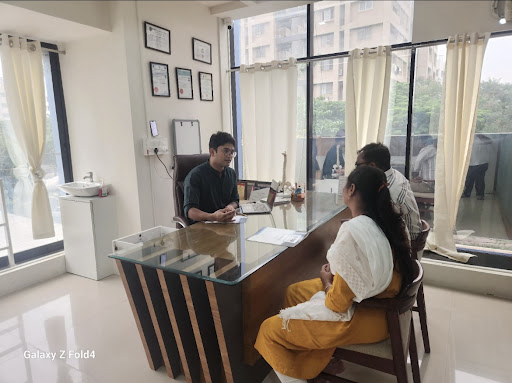
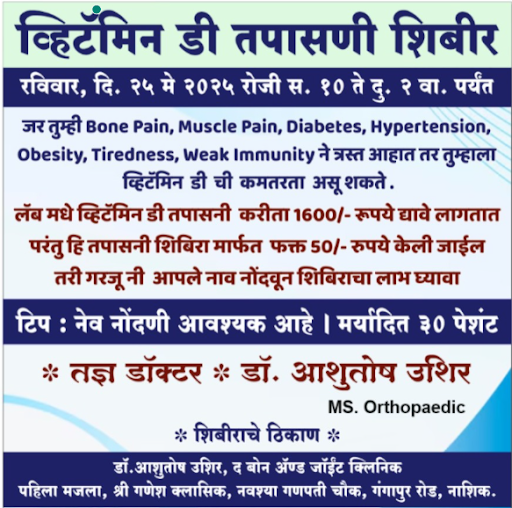
Over 50 individuals from the community were examined and guided on bone health, joint care, and t… post imageRead full post

## What is Osteoarthritis?

Osteoarthritis is a degenerative joint disease that causes wear and tear on the joints, leading to pain, stiffness, and limited mobility. ## Symptoms of Osteoarthritis 1. *Pain and stiffness*: Pain and stiffness in the joints, especially after activity or inactivity. 2. *Limited mobility*: Reduced range of motion and flexibility in the joints. 3. *Swelling and redness*: Swelling and redness around the affected joints. ## Causes and Risk Factors 1. *Aging*: Osteoarthritis is more common in older adults. 2. *Obesity*: Excess weight can put additional stress on the joints. 3. *Injury or trauma*: Previous injuries or trauma can increase the risk of osteoarthritis. ## Treatment Options 1. *Medications*: Pain relief medications and anti-inflammatory medications. 2. *Physical therapy*: Gentle exercises and stretches to improve mobility and strength. 3. *Lifestyle modifications*: Maintaining a healthy weight, exercising regularly, and avoiding repetitive stress on the joints. 4. *Surgery*: Joint replacement surgery or other surgical procedures may be necessary in advanced cases. ## Why Choose Dr. Ashutosh Ushir The Bone and Joint Clinic? 1. *Experienced team*: Our t...

Read full post

Common Fracture Complications

1. Infection: Bacterial infections can occur in the wound or bone, leading to serious complications. 2. Delayed union or nonunion: Fractures that do not heal properly or take longer than expected to heal. 3. Malunion: Fractures that heal in an incorrect position, leading to deformity or limited mobility. 4. Nerve damage: Fractures can cause nerve damage, leading to numbness, tingling, or weakness. 5. Blood vessel damage: Fractures can cause damage to blood vessels, leading to circulatory problems. How to Minimize the Risk of Complications 1. Seek medical attention promptly: Early treatment can help prevent complications. 2. Follow post-operative instructions: Adhere to your surgeon's advice on wound care, medication, and follow-up appointments. 3. Maintain a healthy lifestyle: A balanced diet, regular exercise, and avoiding smoking can help promote healing. Why Choose Dr. Ashutosh Ushir The Bone and Joint Clinic? 1. Experienced team: Our team of orthopaedic specialists has years of experience in fracture care. 2. State-of-the-art facilities: Our clinic is equipped with advanced technology and...

Read full post

Why is Post-Operative Physiotherapy Important?

1. Improved mobility: Physiotherapy helps patients regain strength, flexibility, and range of motion in the knee. 2. Pain management: Physiotherapy can help reduce pain and discomfort after surgery. 3. Faster recovery: A well-structured physiotherapy program can help patients recover faster and return to normal activities. Post-Operative Physiotherapy Exercises 1. Knee bends and straightens: Gentle exercises to improve range of motion. 2. Strengthening exercises: Exercises to strengthen the muscles around the knee. 3. Balance and coordination exercises: Exercises to improve balance and coordination. Tips for a Successful Physiotherapy Program 1. Follow your physiotherapist's instructions: Adhere to your physiotherapist's advice and exercises. 2. Be consistent: Regular physiotherapy sessions and exercises are crucial for a successful recovery. 3. Communicate with your physiotherapist: Inform your physiotherapist about any pain, discomfort, or concerns. Why Choose Dr. Ashutosh Ushir The Bone and Joint Clinic? 1. Experienced team: Our team of orthopaedic specialists and physiotherapists has years of experience in knee repla...

Read full post

What is Non-Surgical Management?

Non-surgical management involves a range of treatments and therapies aimed at alleviating back pain without surgery. This approach can be effective for patients with mild to moderate back pain. Non-Surgical Treatment Options 1. Physical therapy: Gentle exercises and stretches to improve mobility and strength. 2. Pain management: Medication and other interventions to manage pain. 3. Chiropractic care: Spinal manipulation and adjustments to improve alignment. 4. Heat and cold therapy: Applying heat or cold packs to reduce pain and inflammation. 5. Lifestyle modifications: Changes to daily habits, such as improving posture, exercising regularly, and maintaining a healthy weight. Benefits of Non-Surgical Management 1. Reduced risk: Avoids the risks associated with surgery. 2. Less recovery time: Patients can often return to normal activities quickly. 3. Cost-effective: Non-surgical treatments can be more cost-effective than surgery. When to Consider Non-Surgical Management 1. Mild to moderate back pain: Non-surgical management can be effective for patients with mild to moderate back pain. 2. Recent onset: Patients with recent onset of back pain may benefit from non-surgical management. Why Choose ...

Read full post

Immediate Post-Surgery Care

1. Pain management: Follow your doctor's instructions for pain medication. 2. Rest and relaxation: Get plenty of rest to allow your body to heal. 3. Follow post-operative instructions: Adhere to your surgeon's advice on wound care, medication, and follow-up appointments. Short-Term Recovery (0-6 weeks) 1. Physical therapy: Gentle exercises and stretches to improve mobility and strength. 2. Gradual weight-bearing: Progressively increase weight-bearing activities as advised by your surgeon. 3. Monitor for complications: Watch for signs of infection, nerve damage, or other complications. Long-Term Recovery (6-12 weeks and beyond) 1. Continue physical therapy: Regular exercises to maintain mobility and strength. 2. Return to daily activities: Gradually resume normal activities, including driving, walking, and light exercise. 3. Follow-up appointments: Regular check-ups with your surgeon to monitor progress. Tips for a Smooth Recovery 1. Stay hydrated: Drink plenty of water to aid in healing. 2. Eat a balanced diet: Focus on nutrient-rich foods to support recovery. 3. Get support: Reach out to fami...

Read full post

Why Post-Operative Care Matters

Post-operative care is crucial for fracture patients, as it helps prevent complications, promotes healing, and ensures a successful recovery. Dos for Post-Operative Fracture Care 1. Follow your doctor's instructions: Adhere to your orthopaedic surgeon's advice on medication, physical therapy, and follow-up appointments. 2. Keep the wound clean and dry: Prevent infection by keeping the surgical site clean and dry. 3. Manage pain effectively: Take pain medication as directed and report any unusual pain or discomfort to your doctor. 4. Attend physical therapy sessions: Gentle exercises and stretches can help restore mobility and strength. 5. Monitor for complications: Watch for signs of infection, nerve damage, or other complications, and seek medical attention if you experience any unusual symptoms. Don'ts for Post-Operative Fracture Care 1. Don't ignore your doctor's instructions: Failing to follow your orthopaedic surgeon's advice can lead to complications and prolonged recovery. 2. Avoid heavy lifting or bending: These activities can put unnecessary stress on the affected area, leading to furthe...

Why Post-Operative Care Matters post imageRead full post

What are the options?

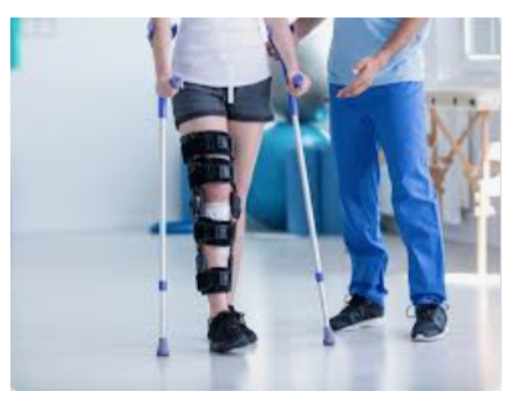
- Casting: A cast is a plaster or fiberglass shell that encases the affected limb to hold the bone in place. - Bracing: A brace is a removable device that provides support and stability to the affected limb. - Pain management: We use a variety of pain management techniques, including medication, ice, and physical therapy, to help manage pain and discomfort. - Physical therapy: Our experienced physical therapists work with patients to create a personalized rehabilitation plan to help restore strength, mobility, and function. Benefits of non-surgical treatment - Less invasive: Non-surgical treatment options are often less invasive than surgery, which means less risk of complications. - Faster recovery: Many non-surgical treatment options allow patients to return to their normal activities faster than surgery. - Less pain: Non-surgical treatment options often result in less pain and discomfort than surgery. When to choose non-surgical treatment - Stable fractures: Non-surgical treatment is often the best option for stable fractures, where the bone is still aligned properly. - Non-displaced fractures: Non-surgical treatment is often the best option for non-displaced fractures, where the bone is not out of place. - Patients with certain medical cond...

What are the options? post imageRead full post

Phases of ACL Rehabilitation

Acute Stage (0-2 weeks) - Focus on reducing pain and swelling - Regain range of motion and strength - Use the PEACE AND LOVE principle: Protection, Elevation, Analgesia, Compression, and Load management [1] - Exercises: - Passive knee extension and flexion - Patellar self-mobilizations - Heel props - Prone hang exercise - Static quads/SLR Pre-Surgical Stage (2-6 weeks) - Focus on strengthening and proprioception - Maintain full extension and improve flexion - Use closed kinetic chain exercises (CKC) and open kinetic chain exercises (OKC) - Exercises: - Strengthening exercises for calf muscle, hamstring, and quadriceps - Proprioception exercises (one-leg standing, balance boards) - Gait training Post-Surgical Stage (6-12 weeks) - Focus on progressive strengthening and functional exercises - Improve range of motion and proprioception - Exercises: - Progressive strengthening exercises for quadriceps and hamstrings - Functional exercises (squats, lunges, steps) - Proprioception exercises (balance boards, single-leg hops) Return to Sport Stage (3-6 months) - Focus on advanced strengthening and functional exercises ...

Phases of ACL Rehabilitation post imageRead full post

Reality: Regular exercise, especially weight-bearing and low-impact activities, can actually help…

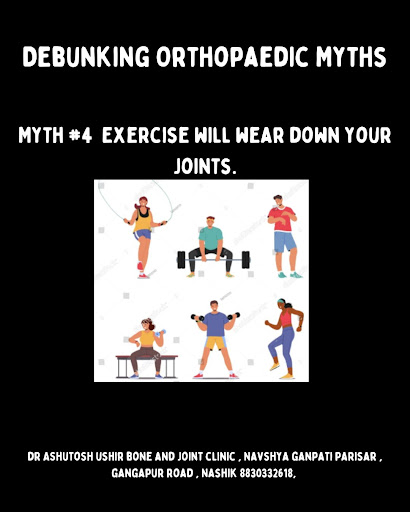
Reality: Regular exercise, especially weight-bearing and low-impact activities, can actually help strengthen joints and improve overall orthopaedic health. It's essential to choose exercises that are suitable for your age, fitness level, and health status. Don't let orthopaedic myths hold you back from seeking proper care or maintaining a healthy lifestyle. By separating fact from fiction, you can make informed decisions about your orthopaedic health. If you have concerns or questions, consult with a qualified orthopaedic professional. At The Bone and Joint Clinic, we're dedicated to providing accurate information and expert care to help you achieve optimal orthopaedic health. Contact us to schedule an appointment or learn more about our services. Dr. Ashutosh Ushir, Consultant Orthopaedic, arthroscopy and joint replacement surgeon The Bone and Joint Clinic 1st Floor, Shree Ganesh Classic, Above Canara Bank, gangapur road Navshya Ganapati Parisar, Anandwali, nashik

Reality: Regular exercise, especially weight-bearing and low-impact activities, can actually help… post imageRead full post

Reality: Orthopaedic surgery is not limited to older adults. People of all ages can benefit from…

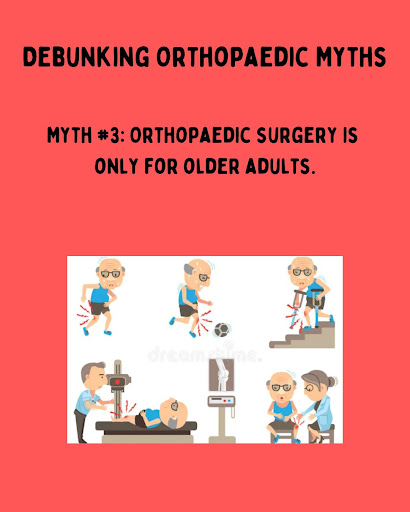
Reality: Orthopaedic surgery is not limited to older adults. People of all ages can benefit from orthopaedic surgery, whether it's to repair a sports injury, correct a congenital condition, or alleviate chronic pain. Don't let orthopaedic myths hold you back from seeking proper care or maintaining a healthy lifestyle. By separating fact from fiction, you can make informed decisions about your orthopaedic health. If you have concerns or questions, consult with a qualified orthopaedic professional. At The Bone and Joint Clinic, we're dedicated to providing accurate information and expert care to help you achieve optimal orthopaedic health. Contact us to schedule an appointment or learn more about our services. Dr. Ashutosh Ushir- Best Orthopaeidic surgeon in nashik The Bone and Joint Clinic 1st Floor, Shree Ganesh Classic, Above Canara Bank, Navshya Ganapati Parisar,  Anandwali gangapur road

Reality: Orthopaedic surgery is not limited to older adults. People of all ages can benefit from… post imageRead full post